Do Vibration Plates Actually Work for Fitness?
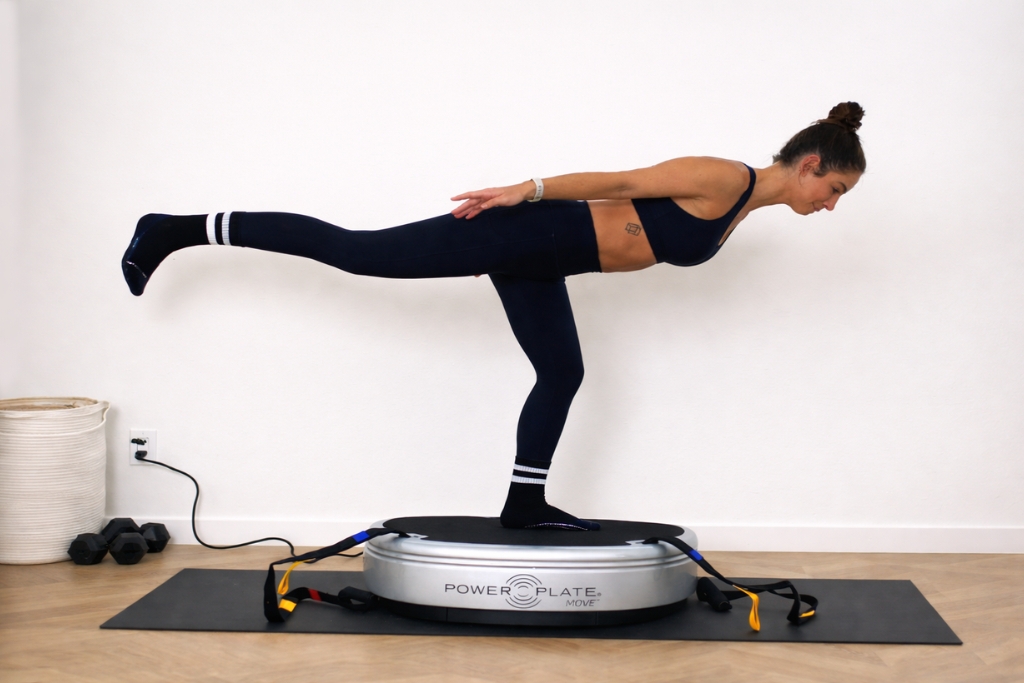
vibration plate weight loss
If you’ve been trying to make fitness easier on your joints, save time at home, or recover faster after workouts, it’s easy to see why vibration plates in 2026 are suddenly everywhere. They’ve moved from late-night gadget territory into serious home gym gear, rehab studios, and even senior wellness programs.
The big promise sounds almost too simple: step on a platform, let it shake, and improve strength, circulation, and recovery. Naturally, that raises the real question people are asking now: do vibration plates actually work for weight loss in 2026, or is this just another flashy fitness trend?
The honest answer is more interesting than the marketing.
What Whole Body Vibration Actually Does
At the core of whole body vibration (WBV) is forced muscle activation.
When the platform moves rapidly beneath your feet, your body responds by firing stabilizer muscles over and over to keep you upright. That repeated involuntary contraction creates a fast cycle of engagement in the calves, quads, glutes, core, and even upper body depending on posture.
This process supports neuromuscular adaptation, which is why many people feel their legs or abs working even during simple standing holds.
The biggest benefit is that it’s low impact, making it attractive for people who can’t tolerate jumping, heavy running, or traditional HIIT.
Vertical vs Reciprocal Plates Matters More Than Most Realize
Not every machine behaves the same, and this is where people often buy the wrong model. Vertical vibration moves the entire plate up and down in a straight line. These systems often use PrecisionWave technology and are popular in athletic training, strength conditioning, and rehab clinics.
Reciprocal vibration, on the other hand, tilts side to side like a seesaw. This mimics natural walking mechanics and is often easier on the lower back and hips.
The Hypervibe vs. Power Plate debate usually comes down to this:
- vertical systems = better for strength, circulation, power
- reciprocal systems = better for balance, daily movement, lower-back comfort
For beginners, reciprocal models often feel easier to adapt to.
Can It Actually Help With Weight Loss
Here’s the truth: vibration plates don’t directly “melt fat.”
Standing still for ten minutes won’t replace walking, resistance training, or calorie control. But WBV can absolutely support fat loss when paired with movement.
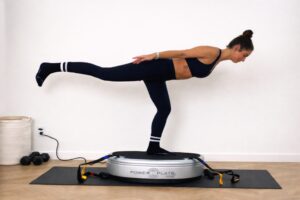
A bodyweight squat, calf raise, or plank done on the plate creates a higher muscular demand than the same move on the floor. That means more total muscle recruitment, better time efficiency, and a stronger metabolic response. So if someone asks whether vibration plates work for weight loss, the answer is yes as an amplifier, not as a passive shortcut. That distinction matters.
Where Vibration Plates Really Shine
The bigger story isn’t fat loss. It’s everything else they do well.
One of the most talked-about uses now is lymphatic drainage. Because the lymphatic system depends on body movement to circulate fluid, the plate’s pulsing motion can help reduce sluggishness, swelling, and that heavy-leg feeling after long sitting hours.
That’s why the best vibration plate exercises for lymphatic drainage are often simple:
- soft knee bends
- calf raises
- standing holds
- heel-to-toe rocking
It’s also becoming one of the more effective recovery tools for soreness and post-leg-day tightness.
Bone Density and Senior Fitness Benefits
This is where the science becomes especially practical. Used correctly, osteoporosis vibration therapy may support bone density, especially in older adults who need safer alternatives to impact training. The micro-loading effect stimulates the skeletal system enough to encourage bone-preserving adaptation without requiring running or jumping.
That said, vibration plate safety for seniors with osteoporosis is critical.
Low-frequency settings, shorter sessions, and physician clearance matter far more than intensity. High-force settings can be too jarring for fragile joints or advanced bone loss.
For older adults, the real advantage is balance training. Better ankle stability, stronger calves, and improved reflexive muscle control can help reduce fall risk.
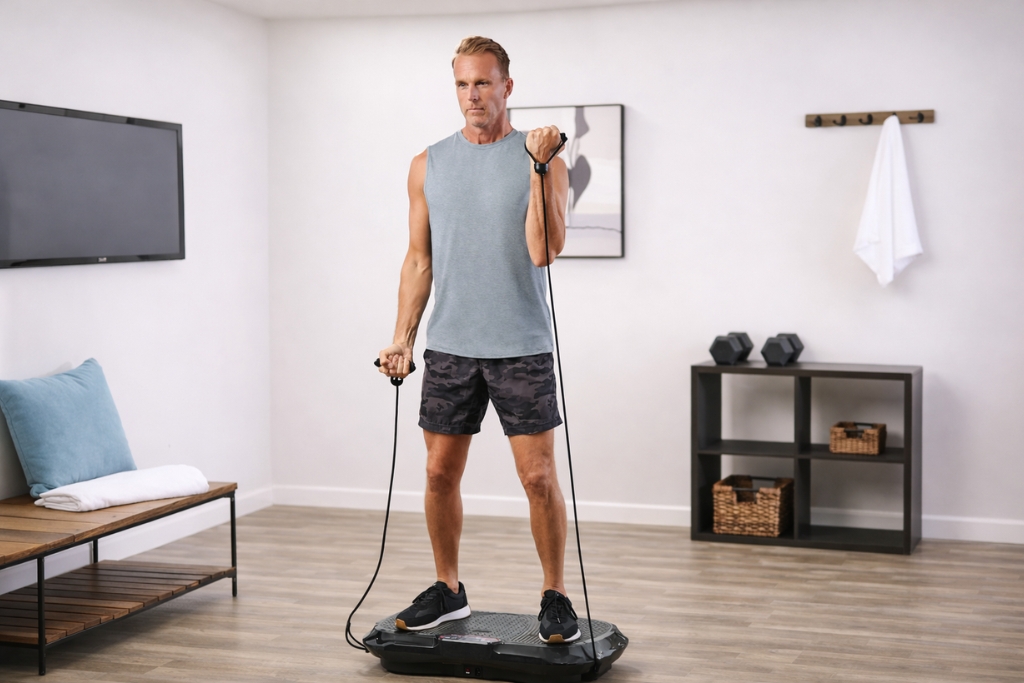
WBV fitness training
Best Ways to Use One at Home
If you want actual results, don’t just stand stiffly and scroll your phone.
Quick Starter Circuit
- 2 minutes standing hold for circulation and balance
- 15 slow squats for lower-body strength
- 1-minute plank hands-on-plate, for core activation
- 20 calf raises for ankle strength and bone support
- 2 minutes seated recovery for calves and hamstrings
This kind of short circuit blends muscle activation, circulation, and recovery into one 10–12 minute block.
Conclusion
Vibration plates absolutely work, but not in the lazy, “just stand there and get shredded” way people hope.
Their real strength lies in making exercise more efficient, more joint-friendly, and more accessible. For busy people, seniors, rehab users, or anyone looking for low impact fitness trends that improve circulation, posture, and muscle recruitment, they’re a genuinely useful tool.
The smartest way to think about whole body vibration (WBV) is this: it won’t replace your workouts, but it can make the workouts you already do more effective, while also giving you better recovery, stronger balance, and a practical boost in day-to-day movement quality.