Skincare Routines That Adapt to Humidity & Weather

Skincare Tips
There’s a certain confidence that comes from understanding your skin – not in a superficial way, but in the way you understand a system you rely on every day. And few things test that system quite like weather. Humidity rises, skin reacts. Winter arrives, and skin responds again. A dry heatwave can turn your go-to routine into a puzzle, and a sudden spell of humidity can turn carefully balanced skin into a shiny, unpredictable canvas.
People are often surprised by how much weather can change how skin acts. It’s not mood swings; it’s how bodies work. All of these things affect what your skin does: the temperature, the amount of water in the air, and how fast your skin loses wetness. And those choices will tell your schedule how to change. Routines that don’t change may look focused, but they don’t work very often. Skin stays healthy, strong, and clearly stable with responsive routines that change based on the weather.
You don’t need a huge collection of goods or a bathroom cabinet that looks like a tiny lab to do this. To do this, you need to know the signals your skin sends when the humidity changes and act with accuracy instead of force. A smart practice changes because it’s thoughtful, not because it’s hard to do.
When Humidity Rises: What Your Skin Really Needs
Humid conditions may feel like the skin is working overtime, and in a way, it is. Moisture in the air slows natural water loss from the skin, which sounds ideal until you realize it also increases oil production for many people. This combination often leads to congestion, surface shine, and breakouts that appear out of nowhere.
A humidity-friendly routine focuses on balance, clarity, and keeping the skin breathable.
- Switch to moisturizers that are lighter –
In humid places, moisturizers that are gel or water-based work well for the skin. They keep the skin moist without making the skin’s natural protection weaker.
- Exfoliate, but don’t overdo it –
Humidity already increases cell turnover for some individuals. A gentle chemical exfoliant once or twice a week prevents congestion while preserving the skin barrier.
- Prioritize Non-Comedogenic Sunscreens –
You have to use sunscreen, but heavy products feel thicker and greasier in humid air. Textures that are light and flowing don’t leave behind residue and keep you comfortable.
- Cleanse Gently –
It’s not okay to strip cleaners because of sweat and oil. A well-made gel or foam wash keeps the skin clear without messing up the microbiome.
Humidity doesn’t demand harsher products – it demands smarter ones.
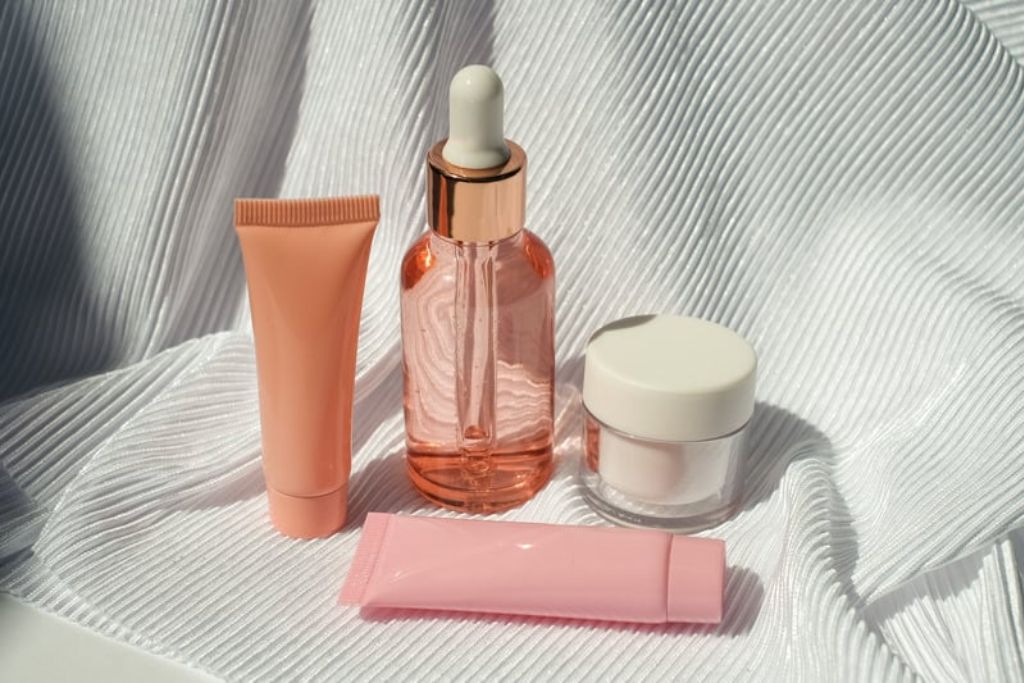
Skincare Products
When the Air Turns Dry: Supporting a Stressed Skin Barrier
Dry air behaves like a silent opponent. It pulls moisture from the skin before you have time to notice, and by the time the effects appear – tightness, flakiness, irritation – the barrier is already stressed.
A dry-weather routine is about reinforcement. The skin needs moisture, but it also needs help hanging onto it.
- Bring Back Cream-Based Moisturizers –
Formulas with ceramides, fatty acids, and glycerin create a supportive layer that prevents water loss.
- Introduce Hydrating Serums Strategically –
Peptides, polyglutamic acid, and hyaluronic acid work effectively when sealed with a moisturizer. They’re insufficient on their own.
- Use Gentle Cleansers with Cushion –
Dry air and harsh cleansers are an unhelpful combination. A milky or cream cleanser keeps the skin balanced.
- Consider a Humidifier for Indoor Support –
Compared to outdoor winter air, indoor heating extracts moisture from the air considerably more quickly. The skin can be significantly stabilized with a slight increase in the humidity in the room.
Dry weather demands care that feels grounding, not heavy. It’s about restoring what the environment quietly takes away.
Dealing with Heatwaves: Oil Control Without Punishment
Everything is amplified by heat. Sunscreen feels heavier, pores become more noticeable, and the skin begins to balance extra sebum and perspiration. Oil protects the skin; therefore, controlling it is the aim, not getting rid of it.
A heatwave routine works best when it focuses on:
- Lightweight hydrators – because dehydration fuels oil production
- Mineral sunscreens that hold up under sweat
- Balancing toners with ingredients like niacinamide
- Minimal layers to prevent suffocation
A practical rule in hot weather: if a routine feels sticky, the products aren’t working for the climate.
Winter Skin Behavior: Sensitivity, Redness & Repair
Another set of difficulties is brought on by cold air. Even those who never experience irritation in other seasons may become sensitive when the skin’s barrier deteriorates.
A winter routine thrives on simplicity:
- Rich moisturizers
- Barrier-repairing serums
- Minimal exfoliation
- UV protection (yes, even in winter)
People often forget that sunlight reflects off winter surfaces more strongly than expected. A lighter winter sun is still a sun.
Why Adaptive Routines Work Better Long-Term
Your skin can keep its natural rhythm when you approach your regimen as seasonal rather than keeping it static. It adapts to the climate rather than fighting it. This change can lessen the long-term stress that many individuals believe is “just their skin type,” as well as breakouts, sensitivity, and inflammation.
Healthy skin isn’t created through intensity. It’s created through alignment – between what the environment demands and what the skin genuinely needs.