Why Karaoke Is the Hottest Wellness Trend of 2026

stress relief activities
For years, karaoke carried a certain reputation. It was the chaotic part of a night out. Someone grabbed the mic, confidence rose with every drink, and the result was usually loud, messy, and unforgettable for all the wrong reasons.
Something interesting has happened in the past couple of years, though. Singing in a room full of people is quietly being reframed as a form of wellness. What used to feel like party entertainment is now showing up in conversations around stress relief activities, mental health hobbies, and even broader wellness trends in 2026.
If you’ve been trying to manage stress, anxiety, or just the constant mental noise of modern life, you might be surprised how often one simple activity keeps popping up in discussions about emotional balance: singing.
Not professionally. Not perfectly. Just singing.
Why Singing Changes Your Mood Almost Instantly
Most people have experienced it at some point. You start singing along to a song in the car or in your kitchen, and suddenly your mood shifts. The stress that was sitting in your shoulders loosens a little.
That reaction isn’t just psychological.
When you sing, your body naturally triggers endorphin release, the same chemical response people get from exercise or laughter. Endorphins create a light sense of euphoria and relaxation. At the same time, dopamine rises, producing what many researchers now describe as dopamine-driven social wellness.
But the bigger shift happens through your nervous system. Singing stimulates the vagus nerve, the long nerve that connects the brain with several organs involved in emotional regulation. The vibrations created during singing act as a form of vocal cord vibration therapy, which gently activates this pathway.
That process contributes to vagus nerve stimulation and gradual vagal tone improvement 2026, helping the body move out of its constant stress-response mode.
Why Karaoke Is Suddenly Everywhere Again
The rise of karaoke in wellness culture didn’t happen by accident. After several years of isolation, screen fatigue, and digital overload, people are craving experiences that feel real and social again.
Karaoke provides that in a surprisingly effective way.
In the UK, spaces offering Lucky Voice wellness sessions have noticed a noticeable shift. Daytime karaoke bookings are growing, and many of the groups arriving are not there to party. They are there because singing together feels good.
The concept fits neatly into the broader idea of community-based mental health. Instead of dealing with stress alone, people are finding relief in shared experiences.
For individuals who struggle with traditional therapy settings, karaoke also functions as one of the more approachable group therapy alternatives. You walk into a room with friends, choose a song, and let the music do the rest.
What Happens in the Body During a Karaoke Session
Singing may look simple, but physiologically it triggers several responses that support emotional regulation.
Breathing slows and deepens when you sing. That breathing pattern itself helps calm the nervous system. At the same time, muscles in the diaphragm and chest engage rhythmically, encouraging relaxation.
Another noticeable effect involves cortisol. Singing has been linked with singing and cortisol reduction, meaning it can lower levels of the body’s primary stress hormone. And then there is the emotional side.
Music has always been one of the easiest ways to release feelings people struggle to articulate. A sad song, an angry breakup anthem, or a nostalgic favorite can create genuine emotional catharsis.
That release is part of the reason karaoke sessions often leave people feeling lighter afterward.
Why Group Singing Works So Well for Anxiety
An interesting pattern has appeared in wellness communities recently. Activities that involve shared rhythm—such as dancing, drumming, or singing—tend to improve emotional states faster than solitary hobbies.
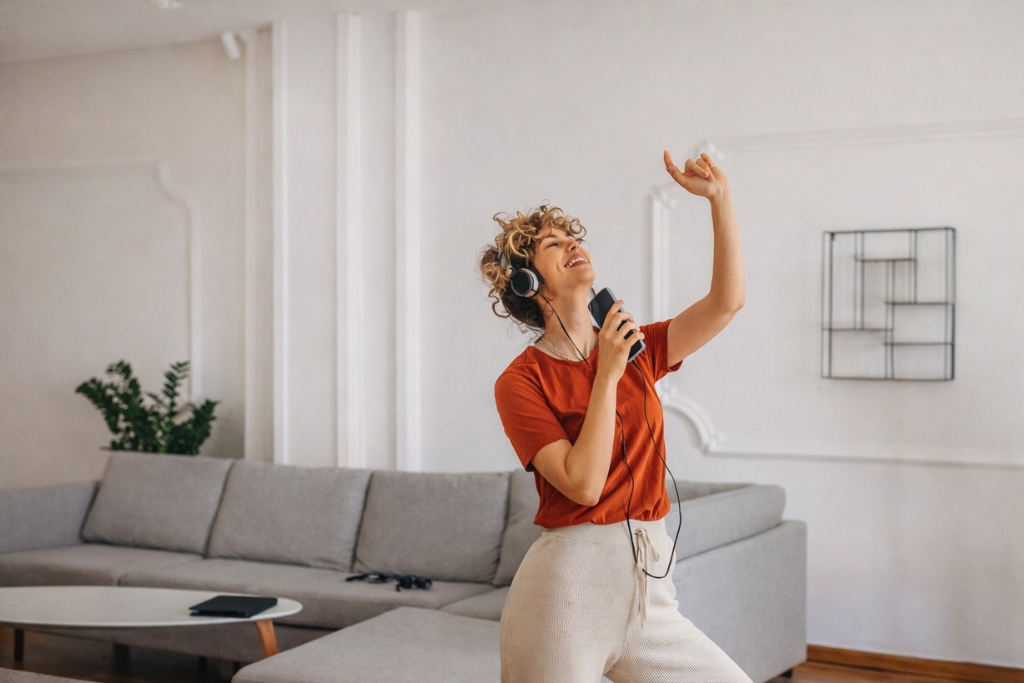
Karaoke fits into that category perfectly. When people sing together, their breathing patterns and vocal rhythms start to align. This subtle synchronization helps create a sense of safety and connection within the group.
That’s one reason group singing for social anxiety is gaining attention as a practical approach to emotional regulation. It allows people to participate socially without needing perfect conversation skills or emotional vulnerability right away.
You just sing.
anxiety relief activities
Why You Don’t Need to Be a Good Singer
One misconception still holds many people back from trying karaoke as a stress outlet: the belief that you need to be good at singing. In reality, musical ability has almost nothing to do with the benefits.
The positive effects come from vocal release, breathing, and shared experience. In fact, enthusiastic off-key singing often produces more laughter and bonding than a flawless performance.
That’s part of what makes karaoke different from many other stress relief activities. There’s no pressure to improve or compete. Participation is the entire point. And that participation creates a sense of connection that many people feel is missing in daily life.
Why Karaoke Is Becoming a Real Wellness Tool
The growing popularity of karaoke in wellness circles highlights something simple but important. People are looking for activities that help them feel better without complicated routines or strict self-discipline.
Singing meets that need surprisingly well. It supports social health in 2026, encourages emotional expression, and creates genuine moments of connection in a world that often feels increasingly isolated.
It also offers a rare combination of physical, emotional, and social benefits all at once. That combination explains why karaoke is the trending mental health activity of 2026.
Conclusion
Wellness practices often sound serious. Meditation, therapy, structured workouts, and mindfulness routines dominate most conversations about mental health. Karaoke reminds us that healing doesn’t always need to look disciplined or quiet.
Through vagus nerve stimulation, endorphin release, and shared human connection, singing can gently reset the nervous system and improve mood in ways that feel effortless. For anyone feeling overwhelmed, stressed, or simply disconnected, the solution may not be another productivity habit. Sometimes it’s just finding a microphone, picking a song you love, and letting your voice do the rest.