Why Dancing Brain Health Matters as You Age
Dancing Benefits
Focused Dancing Benefits go much further than fitness, and that is what makes dance so interesting. Most people think of exercise in a very fixed way. Walking is for the heart. Weights are for strength. Yoga is for flexibility. Dance does not fit neatly into one box because it asks your body and brain to work together at the same time.
That is useful, especially if you want exercise that feels less repetitive. If regular workouts bore you, or if you want movement that supports focus, mood, coordination, and memory, dance is worth taking seriously.
Why Dance Feels Different
Dance is not just movement with music.
It is rhythm, timing, balance, memory, attention, and quick adjustment. You hear a beat, match your body to it, remember the next step, and stay aware of where you are in space.
That is a lot of work for the brain.
A treadmill can help your stamina, and cycling can support cardiovascular health. But dance adds a mental layer. It keeps the brain involved because the pattern keeps changing. That is why dance works so well as one of the more engaging brain health workouts.
Dancing Benefits for Brain Fitness
The biggest Dancing Benefits come from how many systems dance activates together.
Your body moves. Your brain tracks the routine. Your ears follow music. Your memory stores the pattern. Your balance adjusts with every step. Cognitive fitness simply means keeping your brain active, flexible, and able to respond clearly.
Dance supports cognitive fitness because it does not let your brain go on autopilot. Even simple choreography asks you to stay present. If you miss a step, you correct yourself. If the tempo changes, you adjust. That constant correction is part of the benefit.
How Dance Supports Memory
Learning a dance routine is a memory exercise in motion. You are not memorizing one isolated step. You are building a sequence. Step forward. Turn. Pause. Shift weight. Repeat. Then you connect that sequence to rhythm and timing.
That is why choreography and memory are so closely linked.
So, how does learning dance routines improve memory? It trains the brain to hold information, organize it, and recall it while the body is moving. This makes dance more active than simply reading a pattern or watching a video.
You learn by doing. That matters for mental acuity.
Movement, Mood, and Focus
Dance also helps because it feels less like a task.
Many people struggle to stay consistent with exercise because it becomes boring. Dance solves part of that problem. Music brings energy. Movement brings release. Learning steps gives the mind something to focus on.
This is where mood elevation becomes part of the conversation.
Dance can help reduce stress, improve body awareness, and make movement feel more enjoyable. It can also offer a social boost if you join a class or dance with a partner. That social layer is not small. Connection supports brain health too.
Dance and Active Aging
Dancing for brain health becomes especially meaningful with age. As people get older, they often worry about balance, slower recall, coordination, and confidence in movement. Dance can support all of these without feeling like a clinical exercise routine.
Ballroom dancing, salsa, tango, line dancing, and Zumba all offer different benefits. Partner-based styles require timing, communication, and real-time response. Line dancing helps with sequence memory. Zumba adds aerobic movement and rhythm. Freestyle supports expression and creativity.
The cognitive benefits of dance come from this mix of physical and mental challenge. Dance is not a guaranteed shield against dementia, but frequent mentally engaging movement may support dementia risk reduction as part of an overall healthy lifestyle. Research on dance and cognition continues to show promising links, especially for older adults.
Brain health workouts
Best Dance Styles to Try
You do not need to choose the most difficult style.
Pick something you will actually repeat.
- Salsa or tango for rhythm, quick thinking, and partner response.
- Ballroom dancing for posture, coordination, and memory.
- Line dancing for pattern learning and focus.
- Zumba for aerobic movement and energy.
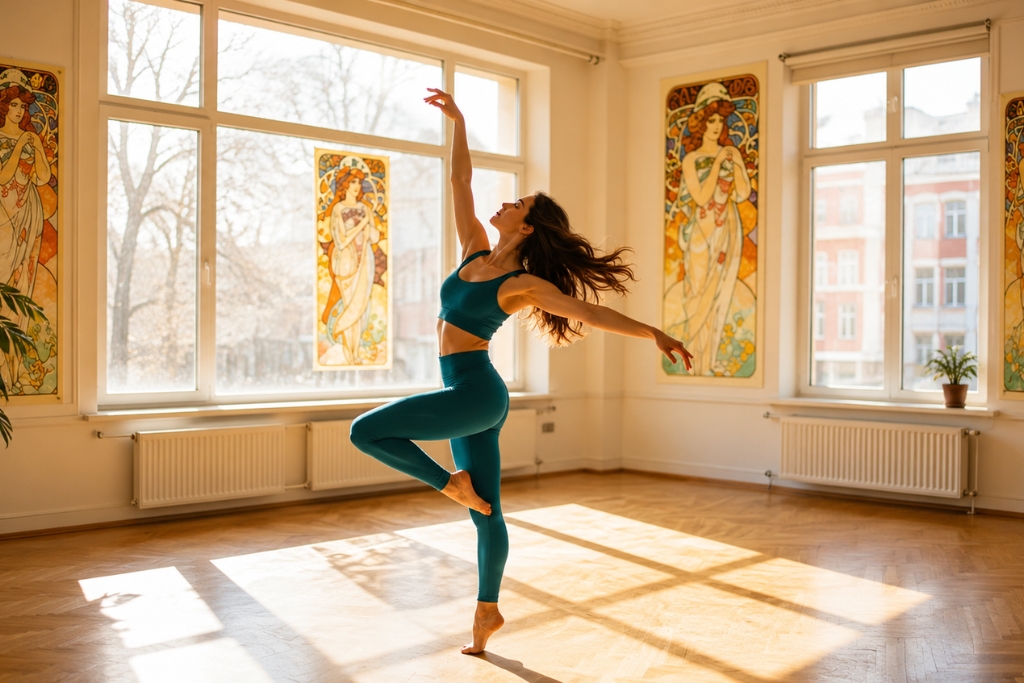
- Contemporary dance for expression and flexibility.
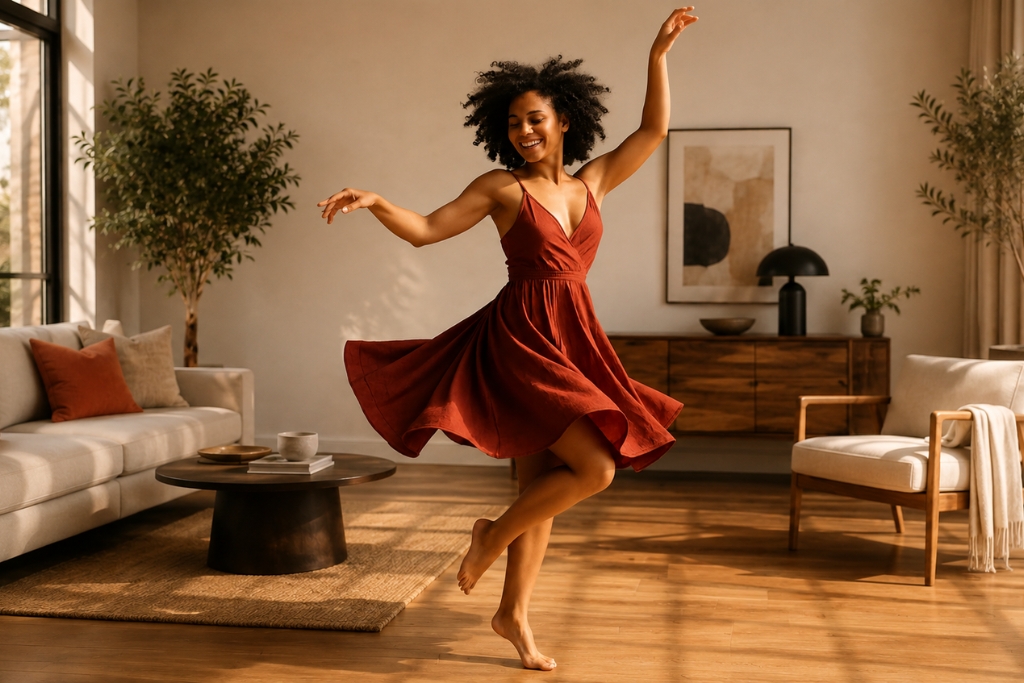
- Simple home routines for low-pressure practice.
The best dance styles for cognitive function and focus are the ones that challenge you just enough. Not too easy. Not too frustrating.
Start Where You Are
You do not need a studio membership to begin.
Start with 10 to 20 minutes at home. Choose beginner videos. Clear space around you. Wear comfortable shoes. Keep the movements simple until your body feels more confident.
If you have joint pain, balance concerns, heart issues, or a medical condition, speak with a healthcare professional before starting intense dance sessions.
The point is not to perform. The point is to move, learn, and stay engaged.
Conclusion
Dancing Benefits make dance one of the most useful forms of movement for both body and brain. It supports aerobic movement, memory improvement, coordination, mood elevation, balance, and mental sharpness through movement. More importantly, it keeps exercise interesting enough to repeat. You can dance at home, in a class, with a partner, or completely on your own. What matters is that your brain stays involved while your body moves. Start simple, learn new steps slowly, and let dance become a practical way to support active aging, focus, and everyday brain health.