Melon and Weight Loss Tips for Sweet Cravings

Melon and weight loss
Melon and weight loss work because it gives you the sweetness people crave without packing in heavy calories. If you are trying to eat lighter but still find yourself wanting something cold, juicy, and satisfying after meals, melon is one of the easiest swaps to make.
That matters. Cravings are not always about weak willpower. Occasionally the body wants volume, hydration, texture, and a little sweetness. Melon covers all four without turning one snack into a calorie bomb.
Why Melon and Weight Loss Make Sense
Melon and weight loss is built around a simple nutrition idea: eat more volume for fewer calories. This is often called volumetric eating. Basically, foods with high water content take up more space in the stomach. That can help you feel fuller while keeping calories lower.
Watermelon, cantaloupe, and honeydew are all hydrating fruits, and they are naturally light. USDA-linked nutrition data shows raw watermelon contains around 30 calories per 100 grams and has about 91.45 grams of water per 100 grams. That is why watermelon for weight loss feels so practical. You can eat a generous bowl and still stay within a sensible snack range.
The Best Melon and weight loss Choice
If the goal is maximum volume with minimum calories, watermelon is usually the best starting point. It is juicy, sweet, easy to portion, and refreshing enough to replace many processed sweet-craving substitutes. A two-cup bowl of watermelon feels much bigger than a small cookie or candy bar, but it usually comes with fewer calories and more hydration.
For anyone dealing with watermelon sugar cravings, that matters. The natural sugar comes packaged with water, nutrients, and volume, which makes it easier to enjoy sweetness without reaching for refined desserts every evening. Whole fruit is not the same as candy, even when it tastes sweet. The structure of the food changes how satisfying it feels.
Cantaloupe and Honeydew Deserve Attention Too
Watermelon gets most of the attention, but cantaloupe benefits are worth noticing. Cantaloupe has a richer flavor, a softer texture, and more of that fragrant, almost floral sweetness that makes it feel dessert-like.
USDA-linked nutrition listings show cantaloupe is also mostly water, with around 90.15 grams of water per 100 grams. Cantaloupe for weight loss works especially well when you want something sweet but a little more filling in texture than watermelon.
Honeydew melon benefits are different again. Honeydew tastes smoother and slightly denser. It can feel more satisfying for people who want a soft, mellow fruit snack instead of the crisp bite of watermelon. USDA-based nutrition data lists raw honeydew melon at around 36 calories per 100 grams. All three can fit into a low-calorie melon diet. The “best” one depends on what keeps you satisfied.
Controlling Craving with Melon
Melon and weight loss are useful because they deal with the emotional side of snacking too. When someone is trying to lose weight, cutting out every sweet food can backfire.
Eventually, cravings come on.
A bowl of cold watermelon or cantaloupe can help bridge that gap. It gives the mouth something sweet, juicy, and refreshing without making the person feel like they “failed” their diet. This is where low-calorie fruits become powerful. They do not just reduce calories. They help people stay consistent. And consistency beats perfection.
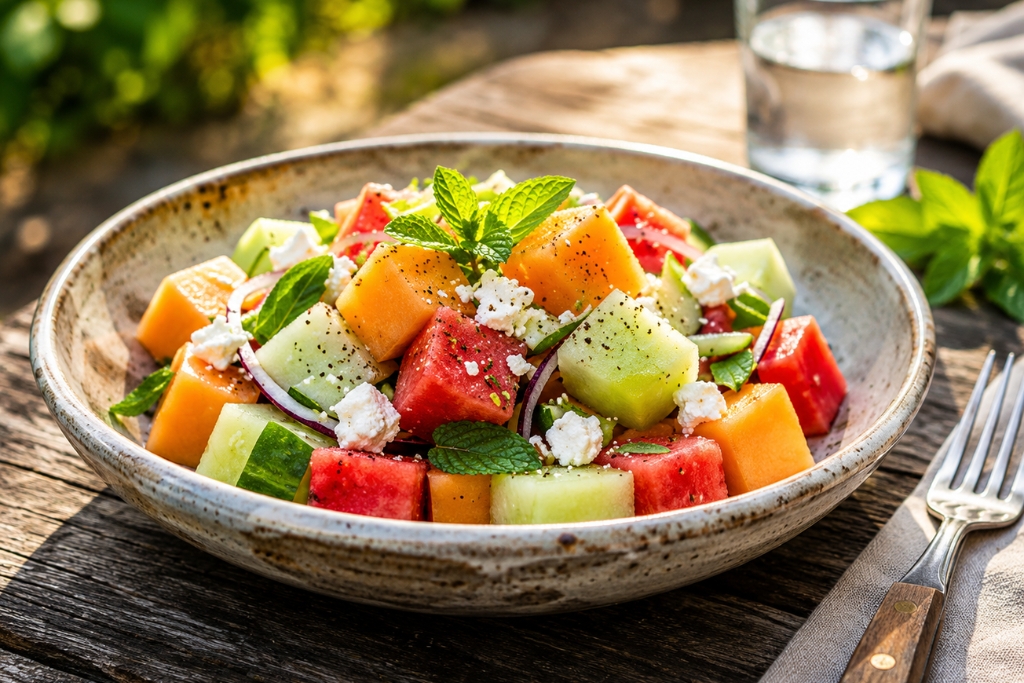 Low calorie fruits
Why Hydration Helps Fullness
High water content foods are useful because dehydration and hunger can feel similar. Some people snack when they are actually thirsty or low on fluids.
Melon helps both. It gives hydration, natural sweetness, and chewing satisfaction. That combination makes it one of the easiest healthy snack ideas for warmer weather, post-workout cravings, late-night sweet cravings, or mid-afternoon hunger.
Satiety-boosting foods do not always need to be heavy. Sometimes they just need volume, water, fiber, and a clean flavor that feels refreshing.
Smart Ways to Eat Melon
Melon works best when you use it with a little strategy.
- Pair watermelon with Greek yogurt for protein.
- Add cantaloupe to cottage cheese for a fuller snack.
- Freeze melon cubes for a low-calorie dessert bowl.
- Blend watermelon with lime and ice for a quick slushie.
- Keep pre-cut melon ready so cravings do not turn into packaged snacks.
- Add honeydew to salads with mint for a fresher side dish.
- Eat melon before a heavier meal if portion control feels difficult.
These are simple dietitian weight loss tips that actually fit normal life.
What Melon Cannot Do
Melon is helpful, but it is not magic. No single fruit can cause fat loss on its own. Weight loss still depends on the overall pattern: calories, protein, sleep, movement, stress, and consistency.
Melon helps because it makes the process easier. It can replace higher-calorie sweets, add volume to meals, and support hydration. But eating unlimited fruit on top of everything else will not create results. That is the honest version. A dietitian-approved weight loss fruit is still just one part of the plate.
How to Use Melon Without Getting Hungry Again
Melon alone may not keep everyone full for hours because it is low in protein and fat. That is not a flaw. It just means pairing matters. For better hunger control, combine melon with protein or healthy fats. Try watermelon with yogurt, cantaloupe with cottage cheese, or honeydew with a small handful of nuts.
This slows digestion and makes the snack more balanced. If you only eat fruit and then feel hungry again 30 minutes later, the problem is not the fruit. The snack simply needs more structure.
Conclusion
Melon and weight loss work best because they make healthy eating feel less restrictive. Watermelon, cantaloupe, and honeydew all offer hydration, natural sweetness, and low calories, making them smart choices for people who want to manage cravings without giving up enjoyable food. Watermelon is the strongest pick for maximum volume and refreshment; cantaloupe brings richer sweetness and nutrients, and honeydew gives a smooth, satisfying bite. Use melon as a snack, dessert swap, pre-meal filler, or frozen treat, and pair it with protein when you need longer fullness. Small choices like this make weight loss feel more realistic, and that is usually what keeps people going.