Looking at Carbs for Sleep? Here’s What Quinoa Can Offer
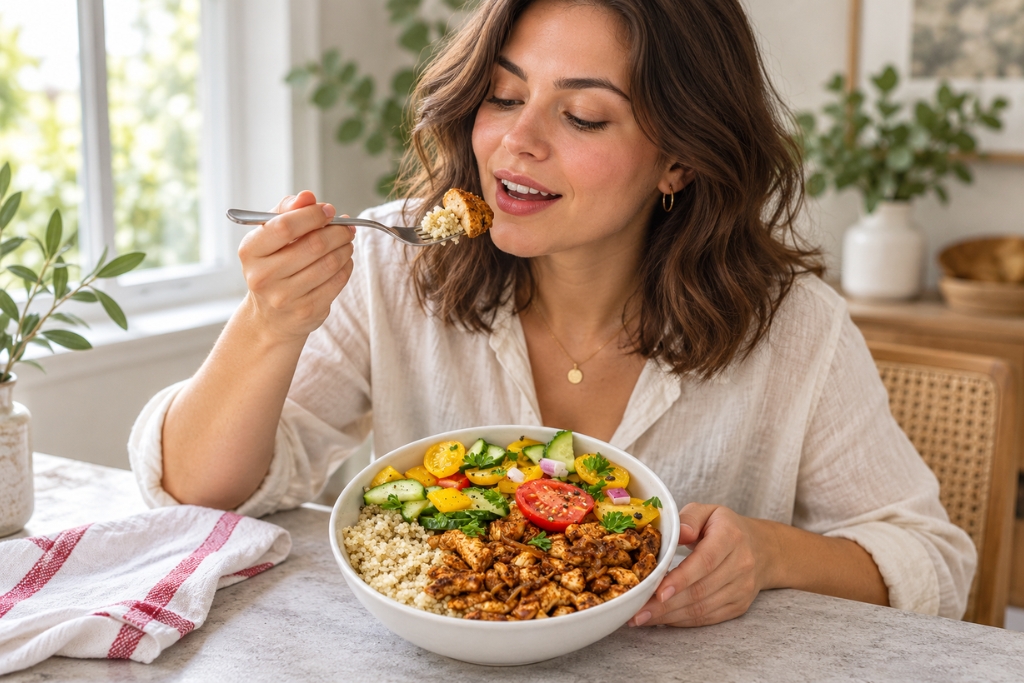
carbs for sleep
If you’re tired at bedtime but still struggle to settle, changing dinner can seem more manageable than overhauling your entire routine. Choosing carbs for sleep may support healthier evening eating habits, although no ingredient can guarantee a good night’s rest.
The surprising dinner choice is quinoa. Usually served like a grain, this seed provides carbohydrates alongside fiber, protein, and magnesium. That combination makes it a useful addition to a balanced evening meal, rather than a sleep remedy in disguise.
Why Quinoa Makes a Practical Dinner Choice
Quinoa has a mild, slightly nutty flavor and works with ingredients you probably already cook. It can replace rice beside roasted vegetables, bulk out soup, or form the base of a warm dinner bowl.
A cup of cooked quinoa supplies approximately eight grams of protein and five grams of fiber. It also contributes magnesium, a mineral involved in normal muscle and nerve function. These qualities help explain its appeal among sleep-friendly carbohydrates. However, containing magnesium doesn’t establish that a food improves sleep. Research on magnesium supplements for insomnia remains limited, and those findings cannot establish quinoa’s effectiveness either. Think of its nutritional value as the main benefit; any sleep improvement is less certain.
What Research Says About Carbs for Sleep
The relationship between evening carbohydrate intake and sleep is more complicated than “complex carbs good, refined carbs bad.”
In one small trial, 12 healthy young men fell asleep faster after eating a high-glycemic-index rice meal four hours before bedtime than after a lower-GI meal. Glycemic index describes how quickly a carbohydrate-containing food raises blood sugar under standardized testing conditions.
That study tested rice, not quinoa, and measured a short-term response in a small, specific group. It doesn’t prove that high-GI dinners improve sleep for everyone. A systematic review found mixed results across six clinical trials, highlighting how limited the evidence remains.
When choosing carbs for sleep, prioritize a dinner you digest comfortably and can enjoy consistently. A promising laboratory result shouldn’t outweigh your overall nutritional needs.
The Tryptophan Connection Needs Some Perspective
Carbohydrates may influence how much tryptophan reaches the brain. Tryptophan is an amino acid the body uses in pathways involved in producing serotonin and melatonin, which help regulate mood and sleep timing.
An insulin response can change the balance between tryptophan and competing amino acids in the bloodstream. This provides a possible explanation for some carbohydrate-and-sleep findings. It isn’t an automatic chain in which eating quinoa produces more melatonin and immediately causes sleepiness.
Likewise, “tryptophan-rich carbs” and “melatonin-boosting foods” are convenient labels, but they can oversimplify how a mixed meal works. Your portion, other ingredients, and usual eating pattern all matter.
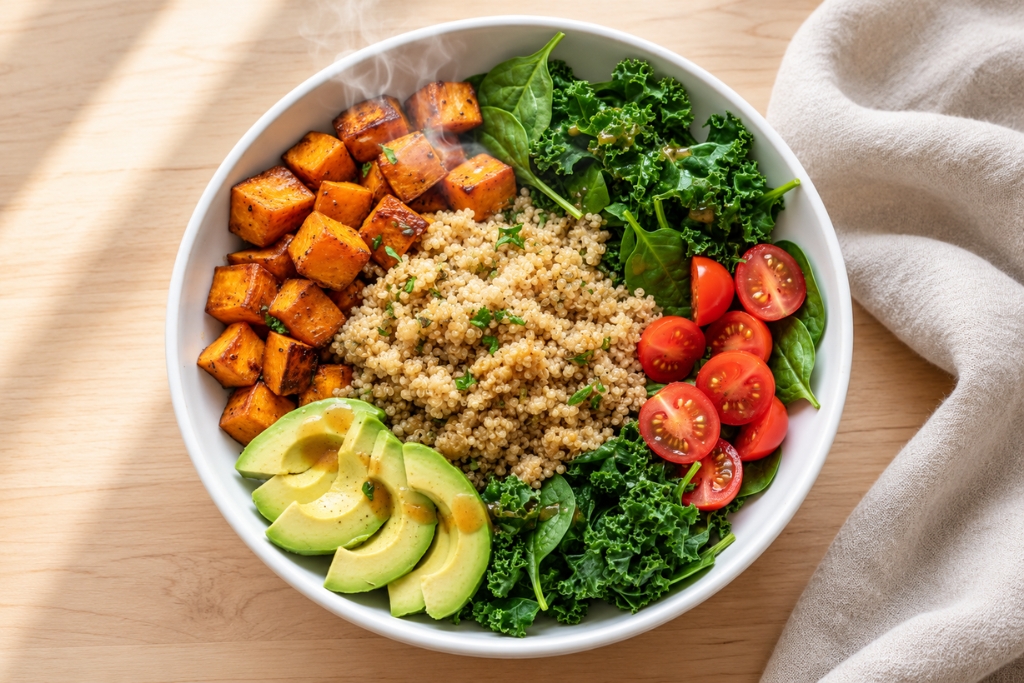 bedtime meal timing
Build a Dinner That Feels Comfortable
Eating carbs at dinner for sleep doesn’t require a large bowl of plain grains. Start with an amount that suits your appetite, then add vegetables, a protein source, and a dressing or seasoning you enjoy.
These combinations make quinoa easier to work into ordinary meals:
- Toss it with roasted carrots, chickpeas, parsley, and lemon.
- Serve it beside baked fish and steamed green vegetables.
- Add it to a vegetable soup for a more substantial dinner.
- Combine it with tofu, sautéed mushrooms, and a little sesame dressing.
Pairing foods this way supports a balanced meal; it doesn’t guarantee greater tryptophan uptake or better sleep. There’s also no need to force quinoa into your diet. Other healthy carbohydrate sources can fit comfortably into dinner.
Give Your Evening Meal Some Breathing Room
Bedtime meal timing deserves attention alongside ingredients. A heavy dinner shortly before lying down can make settling uncomfortable, particularly if fullness or reflux already interrupts your evenings.
Finishing a substantial meal a few hours before bed is a practical starting point. A light snack is reasonable if hunger would otherwise keep you awake. Caffeine and alcohol also deserve attention: both can interfere with sleep, regardless of what’s on the dinner plate.
Choosing carbs for sleep works best as one modest part of a consistent routine. Quinoa offers a nutritious, adaptable dinner option, but it shouldn’t carry the burden of fixing restless nights. Keep meals comfortable, allow time to digest, and notice what suits your body. Persistent sleep problems deserve attention beyond the menu.