How Healthy Is Chicken Noodle Soup, Really?
Healthy comfort food
If there’s one food that feels almost universally comforting, it’s chicken noodle soup. You don’t usually crave it when things are going well. You reach for it when you’re tired, run-down, sick, or just in need of something gentle. For many people, it brings back memories of being taken care of—someone setting a bowl in front of you and telling you to rest.
That emotional connection matters, but it doesn’t automatically make chicken noodle soup a health food. Whether it actually helps your body depends on how it’s made, what’s in it, and how often you rely on it. In 2026, when people are more aware of ingredient quality, gut health, and UPF awareness, it’s worth being honest about where this classic dish supports your health—and where it can quietly work against it.
What Chicken Noodle Soup Is, at Its Simplest
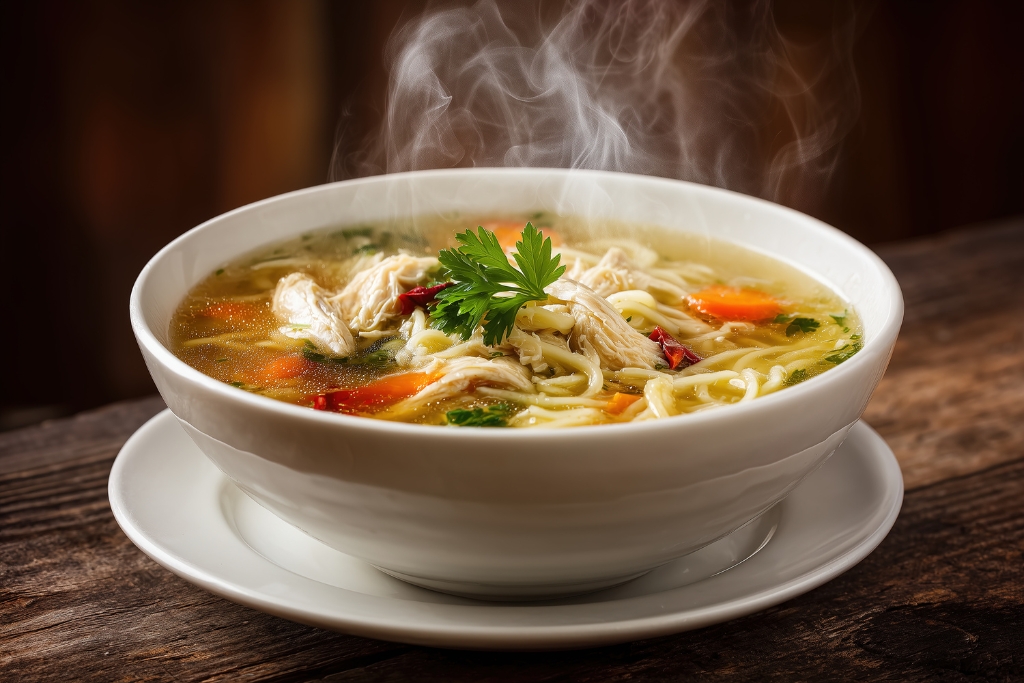
At its most basic, chicken noodle soup is a broth with chicken, noodles, vegetables, and herbs. Most traditional versions use carrots, celery, onions, and either egg or wheat noodles, all simmered together until the broth takes on a rich, familiar flavor.
The big difference isn’t the recipe itself, but where it comes from. Homemade soup gives you full control. Fresh soups from a restaurant or deli sit somewhere in the middle. Canned soup, while convenient, often comes with higher sodium, preservatives, and fewer vegetables than you might expect. That’s where the nutritional value can start to drop off.
When It Actually Helps You
When made with real ingredients, chicken noodle soup does offer real benefits.
The chicken provides protein, which your body needs for immune support, tissue repair, and muscle maintenance. This is especially useful when you’re sick or not eating much. A protein-forward meal doesn’t have to be heavy, and soup can deliver that balance gently.
The vegetables contribute vitamins and minerals your body still needs, even when your appetite is low. Carrots support immune function, while celery and onions provide potassium and vitamin C. Together, they add antioxidant support and help your body manage inflammation.
The broth itself plays a role, too. Warm liquids can soothe a sore throat, help thin mucus, and make it easier to stay hydrated. If you’ve had a fever, are sweating more than usual, or just don’t feel like drinking much water, soup can quietly help fill that gap.
There’s also the comfort factor, which shouldn’t be dismissed. Feeling calm and cared for reduces stress, and stress affects digestion and immunity through the gut-brain axis. That sense of ease you feel while eating soup isn’t separate from health—it’s part of it.
Where It Starts to Miss the Mark
The problems usually come down to frequency and formulation. Sodium is the biggest concern, especially with canned or packaged soups. Many contain 700 to 900 milligrams of sodium per serving. If soup becomes a daily habit, that sodium adds up quickly and may contribute to bloating, fluid retention, or blood pressure issues.
Noodles are another factor. Traditional egg noodles are refined carbohydrates and low in fiber. If your bowl is heavy on noodles and light on vegetables or protein, it may not keep you full for long. This technique runs counter to approaches like fibermaxxing, which focus on steady energy and digestive support.
Some store-bought soups also fall short on substance. You may get more broth than chicken, fewer vegetables than expected, and added flavor enhancers instead of real depth. These versions don’t do much to support gut health or microbiome personalization, especially if they replace more nutrient-dense meals.

Chicken soup benefits
Can You Eat It Every Day?
It can be, but only if you’re thoughtful about it.
If the soup is homemade or low in sodium, loaded with vegetables, and includes enough protein, it can fit into a balanced routine. If it’s canned and salty, daily consumption may slowly crowd out better options.
If soup shows up often in your meals, small changes make a big difference:
- Add more vegetables and reduce the noodles
- Use herbs, garlic, and spices instead of relying on salt
- Choose whole-grain or legume-based noodles when possible
- Pair soup with fiber-rich foods if it’s your main meal
These tweaks help support satiety, digestion, and gut balance, aligning better with modern nutrition goals like supporting postbiotics and overall digestive resilience.
Where It Fits In a Modern Diet
Chicken noodle soup isn’t meant to be a superfood. It works best as a supportive food, something you turn to when your body needs warmth, hydration, and simplicity.
In a world where people think about regenerative farming foods, experiment with gut-focused eating, and track how foods make them feel, soup earns its place when it’s made simply and eaten intentionally. It doesn’t replace variety, fiber-rich meals, or whole foods—but it can support them.
Conclusion
Chicken noodle soup helps when it’s real, balanced, and occasional. It hydrates, nourishes, and comforts in ways that matter, especially when you’re not at your best. It stops helping when it’s overly processed, overly salty, or used as a daily shortcut.
If you treat it as a tool—not a cure-all—it does exactly what it’s always done best: it supports you quietly, one warm spoonful at a time.