Relaxing Bedtime Yoga for Better Sleep and Recovery
relaxation yoga poses
You can feel completely drained at the end of the day and still struggle to fall asleep. Your body is tired, but your thoughts keep circling. This is where bedtime yoga can help. Gentle evening yoga gives your mind something steady to focus on while releasing physical tension you may not even realize you’re holding. Slow movement paired with intentional breathing helps shift you out of a stressed, alert state and into one that supports rest.
From a wellness perspective, this is closely tied to nervous system regulation. When your system moves out of “fight or flight” and into “rest and digest,” your heart rate slows, stress hormones ease, and your body gets the signal that it’s safe to sleep. This is also why bedtime yoga is often linked to somatic healing and vagus nerve yoga, both of which emphasize calming the body before calming the mind.
How Yoga Supports Better Sleep
If you’ve ever finished a gentle yoga session and noticed your thoughts felt quieter, that’s not a coincidence. Yoga encourages you to link breath with movement, which naturally reduces mental noise. This shift is especially helpful if your day included intense training like HYROX training, VO2 max training, or even steady zone 2 cardio, all of which can leave your nervous system overstimulated late into the evening.
Unlike high-intensity exercise or even trends like low-impact power plyometrics, bedtime yoga focuses on slowing everything down. The poses are designed to feel supported, passive, and grounding. Over time, this kind of practice can improve how quickly you fall asleep and how deeply you rest.
How to Prepare for a Bedtime Yoga Practice
Before you begin, it’s important to approach bedtime yoga differently than a daytime flow. This is not about stretching your limits or improving flexibility. It’s about comfort. You should never force yourself into a pose, especially if you’re new to yoga or dealing with stiffness or injury.
Using props can make a big difference. Blocks, straps, or folded blankets allow you to settle into positions without strain. A blanket under your knees or hips, a block supporting your head, or a strap to gently extend your reach can help your body relax instead of resist. This kind of supported setup also aligns with somatic movement for stress relief, where ease matters more than depth.
Before moving into longer holds, warming up gently helps. A few neck rolls, shoulder circles, slow cat cow movements, and a short pause in child’s pose can prepare your body for stillness.
evening yoga routine
Five Calming Yoga Poses to Do Before Bed
The goal of these poses is not to energize you but to wring out the stress of the day and prepare you for sleep. Reclined twists, passive hip openers, and gentle inversions tend to be especially effective.
- Child’s Pose (Balasana)
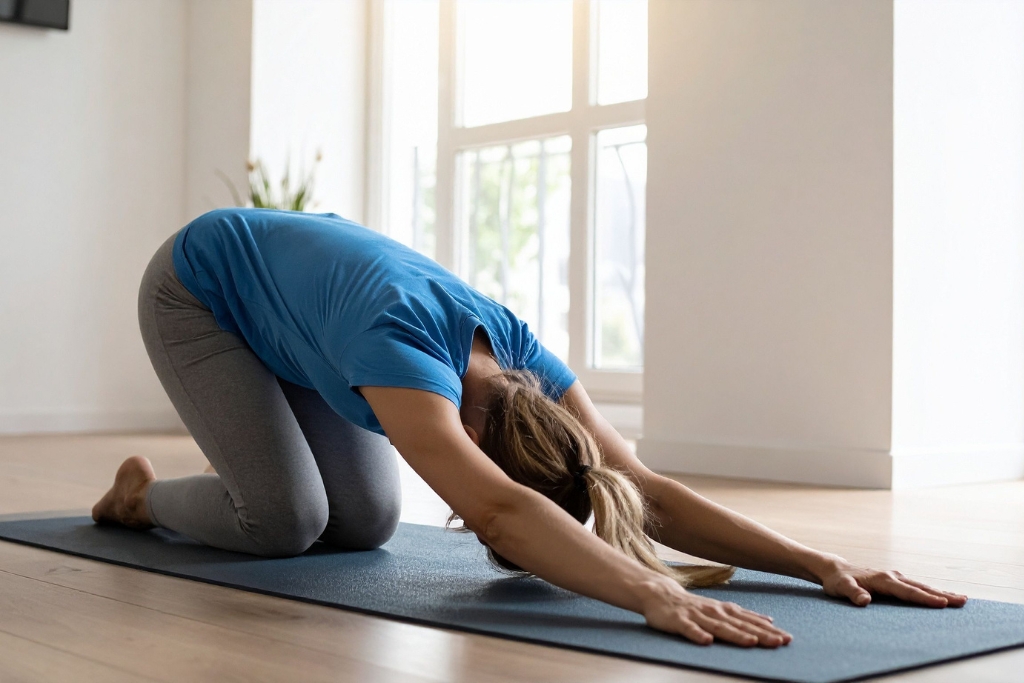
This pose helps you feel grounded and supported almost immediately. As you sink your hips toward your heels and rest your forehead down, your spine lengthens and your breath naturally slows. Staying here for several deep breaths can quiet your thoughts and ease tension in your back and hips.
- Reclining Bound Angle Pose (Supta Baddha Konasana)
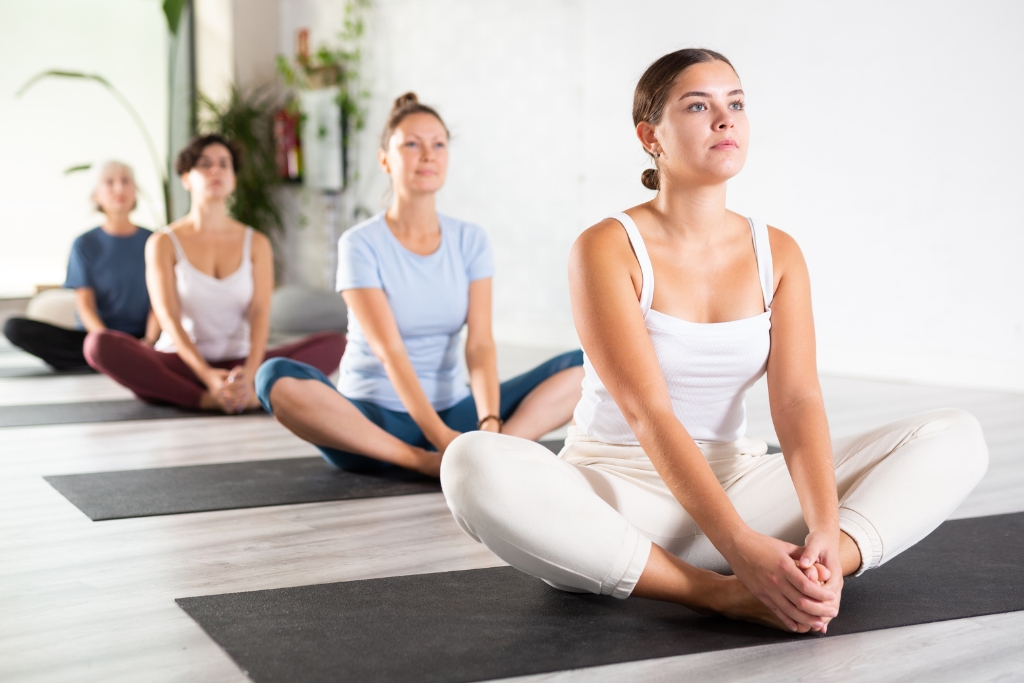
This pose targets the hips and inner thighs, areas that often tighten from long hours of sitting. With the soles of your feet together and your knees supported by blocks or pillows, gravity does the work. The more supported you feel, the easier it is for your body to relax.
- Reclined Pigeon Pose (Supta Kapotasana)
A gentler version of traditional pigeon, this pose opens the hips without placing pressure on your knees or lower back. Lying on your back keeps the posture calming rather than activating, making it suitable right before bed.
- Legs Up the Wall (Viparita Karani)
This simple inversion helps release tension in your legs and lower back while supporting circulation. If your day involved lots of standing, walking, or even silent walking as a mindfulness habit, this pose can feel especially relieving.
- Modified Plow Pose (Halasana)
This is the most advanced option and should only be done if it feels comfortable. Using a chair or bolster under your legs keeps the pose restorative rather than intense. The gentle inversion can feel deeply grounding when done with support.
How to Make Bedtime Yoga a Sleep Habit
You don’t need a long routine. Even five to ten minutes can help your body recognize that it’s time to wind down. Consistency matters more than duration. Practicing a few poses nightly builds a mental and physical association with rest.
If you already track health data through wearables or pay attention to trends like bio-wearable accuracy or FDA-cleared blood pressure watches, you may notice improved sleep patterns when evening movement becomes calmer and more intentional.
Conclusion
Yoga before bed isn’t about being flexible or doing well. It’s about relaxing. As you do this, allow your body and mind to slow down. When you focus on your breath and do easy, supported poses, you help your nervous system get ready for sleep. With practice, these small habits can help you fall asleep more easily and without much trouble over time.