Barefoot Walking Benefits Versus Earthing Hype

Barefoot walking benefits
Barefoot walking benefits sound tempting if your feet feel stiff, tired, or trapped in shoes all day. The idea is simple: take off your shoes, let your feet move naturally, improve balance, strengthen muscles, and maybe even fix your posture.
Nice promise. But foot health is more complicated than that. Barefoot walking can help some people build better sensory feedback and foot muscle strength. It can also irritate the plantar fascia, worsen heel pain, or expose your skin to cuts and infection if you do too much too quickly.
Why Barefoot Walking Benefits Make Sense
Your feet are built to move, flex, grip, and feel the ground. Thick shoes can protect your feet, but they also reduce how much information your soles send to the brain. That matters.
Proprioception is your body’s ability to sense position and movement. When you walk barefoot on grass, carpet, sand, or a clean mat, the nerves in your feet send more feedback. Harvard Health notes that being barefoot can improve proprioception, which helps the body sense where it is in space. This is one of the more realistic barefoot walking benefits. It is not mystical. It is biomechanics.
Barefoot Walking Benefits for Foot Strength
When you walk without stiff soles or heavy cushioning, small foot muscles have to work harder. These intrinsic foot muscles help support the arch, stabilize the toes, and guide each step.
A study on minimal footwear found that daily activity in minimalist shoes increased foot strength, with earlier research also linking minimal footwear use to stronger foot muscles after several weeks. That does not mean everyone should throw away their shoes. It means foot muscle activation going shoeless can be useful when introduced gradually. Start with short, controlled sessions. Let the feet adapt. Muscles, tendons, and the plantar fascia need time.
Natural Gait and Foot Posture
Barefoot walking may encourage a more natural gait because your foot can spread, flex, and respond to the surface below. Some people also notice better foot posture when they stop wearing narrow, stiff shoes all day.
But don’t overclaim it. Barefoot walking will not instantly “realign” your whole body. It will not fix every knee, hip, or back issue. A critical review on footwear and locomotor health found limited evidence for health benefits from many typical shoe features, while also noting that minimal footwear may support more natural gait patterns in some cases.
So the answer to “Is walking barefoot better for your foot posture and gait?” is sometimes, for some people, when done sensibly.
Earthing Grounding and the Hype Problem
This is where the conversation gets messy. Earthing grounding claims often suggest that direct contact with the earth can reduce inflammation or improve health through electrical energy transfer. The relaxing part may be real. Standing on cool grass, breathing fresh air, and feeling soil or sand under your feet can calm the body.
But earthing science vs. hype needs a hard line.
The strongest everyday case for barefoot walking is not “earth electrons.” It is sensory feedback, balance practice, foot strength, and a calmer outdoor routine. Those are enough. You don’t need exaggerated wellness claims to justify a barefoot walk. Fresh air, sunlight, slow movement, and reduced phone time may explain many of the mood benefits people attribute to grounding.
 Barefoot walking
Indoor vs. Outdoor Barefoot Walking
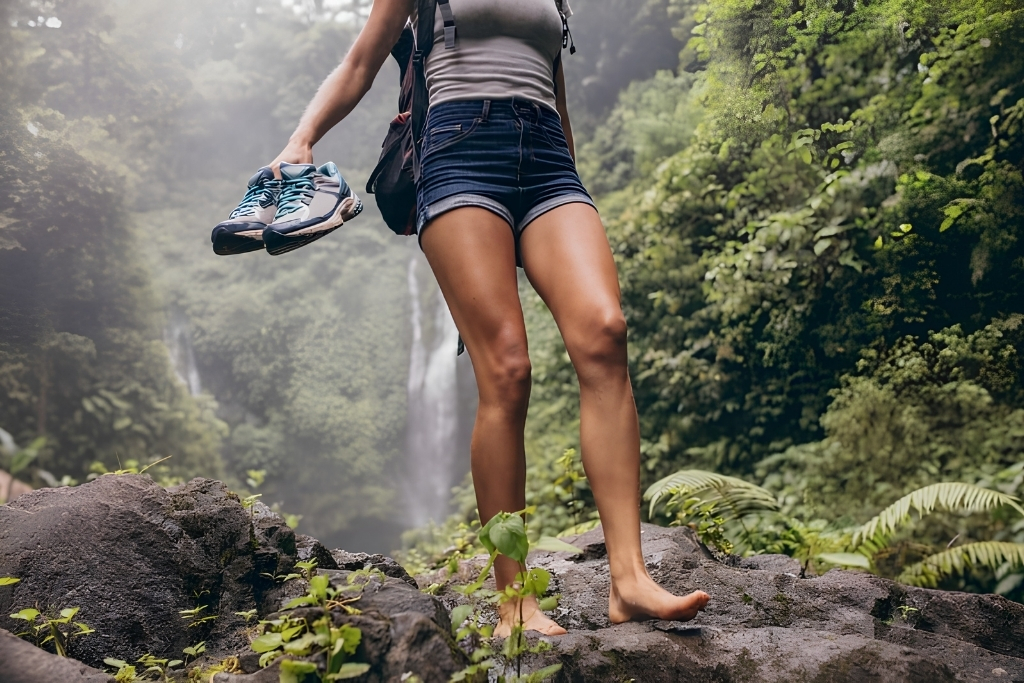
Barefoot walking indoors vs. outdoors depends on surface and safety. Indoors, you control the environment. Carpet, yoga mats, clean floors, and soft rugs can be good places to begin. Hard tile and concrete are less forgiving, especially if you have heel pain or weak arches.
Outdoors, the sensory benefits are stronger. Grass, sand, and natural soil give your feet more feedback. But the risks also rise: glass, sharp stones, insects, bacteria, fungus, and uneven ground.
Cleveland Clinic notes that minimalist toe shoes can offer some barefoot-style benefits while protecting skin from whatever surface you are walking on. That makes minimalist footwear a useful middle ground.
The Real Risks People Ignore
Barefoot walking pros and cons depend heavily on your current foot condition.
If you already have plantar fasciitis, Achilles pain, diabetes, neuropathy, arthritis, thin skin, or chronic foot pain, going barefoot may not be the smart move. Nebraska Medicine advises that people with diabetes, neuropathy, heel pain, plantar fasciitis, thin skin, arthritis, or chronic foot pain are generally safer wearing shoes indoors.
Barefoot walking risks plantar fasciitis because suddenly removing cushioning and heel support can load tissues that are not ready for it. That is especially true on hard floors.
How to Start Safely
Use this simple plan to get the upside without inviting injury:
- Start with 5 to 10 minutes on carpet, grass, or sand.
- Avoid hard concrete at the beginning.
- Add time slowly, not daily marathons.
- Try toe spreads, calf raises, and arch lifts.
- Use minimalist footwear outdoors for protection.
- Stop if heel, arch, or Achilles pain appears.
- Don’t go barefoot in public gyms, streets, or dirty areas.
- Check your feet after outdoor walking.
Small steps work better than sudden lifestyle changes.
When Shoes Are Still Better
Shoes are not the enemy. Bad shoes can be a problem, but protection matters.
You need footwear on hot pavement, rough trails, public bathrooms, gym floors, city streets, and anywhere the surface may cut, burn, or infect the skin. You may also need supportive footwear if your feet are already painful or your doctor has advised it.
Good podiatrist advice for walking barefoot usually comes back to the same principle: match the surface, your foot condition, and your activity level. Not every foot needs the same rule.
Conclusion
Barefoot walking benefits are real, but they are not magic. Going shoeless can support proprioception, foot muscle strength, natural gait awareness, and better foot movement when introduced slowly on safe surfaces. The hype begins when barefoot walking is sold as a cure-all for inflammation, posture, or chronic pain. The smarter approach is balanced. Walk barefoot indoors or on soft natural ground for short periods, use minimalist footwear when you need protection, and avoid pushing through pain. For healthy feet, barefoot walking can be a useful habit. For painful or high-risk feet, supportive shoes may be the healthier choice.