Small Routine Changes That Improve Hair Care Over 50
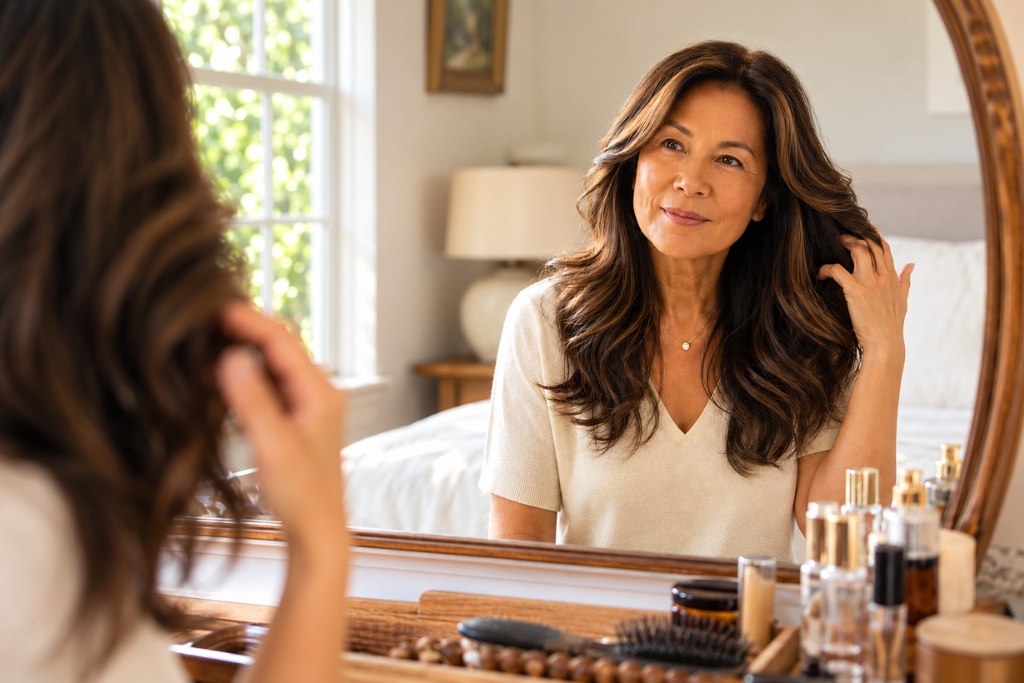
hair care over 50
Hair care over 50 starts with gentle cleansing, regular conditioning, and styling that limits damage. If your hair feels drier, looks flatter, or breaks more easily, adjusting those basics can help. A widening part or persistent shedding needs attention too, because cosmetic products cannot treat every cause of hair loss.
It’s frustrating when a routine that worked for years suddenly leaves your hair looking different.
The answer isn’t necessarily more products. It’s choosing care that matches your scalp and strands now.
Why Your Hair May Feel Different
Menopause can coincide with changes in hair density, while coloring, heat styling, and everyday handling can contribute to damage. Female pattern hair loss often begins in midlife and becomes more common after menopause.
That doesn’t mean every change is hormonal.
Breakage affects the hair shaft, while shedding happens when hairs leave their follicles. Dry ends, snapped strands, and a widening part may need different responses. Understanding that distinction makes aging hair care more useful.
Match Hair Care Over 50 to Your Scalp
Choose your washing schedule according to oiliness, sweat, and product buildup. There’s no rule that every woman should shampoo less often after her fiftieth birthday.
Massage shampoo gently into the scalp with your fingertips. Let the rinse run through the lengths instead of scrubbing them. This cleans the roots without unnecessarily drying the rest of your hair.
Hydrating shampoos may suit dry hair. Sulfate-free shampoos can also be worth trying, but the label alone doesn’t establish that a formula will suit you. Scalp comfort and effective cleansing matter more than a single ingredient claim.
Condition Where You Need It
Use conditioner after shampooing. For fine or straight hair, concentrate on the ends; dry or curly hair may benefit from application throughout the lengths. Start with a modest amount. If your roots look flat afterward, adjust the placement before abandoning conditioner altogether.
Hydrating treatments for gray hair can improve softness and manageability. A mask may help when regular conditioning feels insufficient.
Conditioners reduce friction and make detangling easier. They don’t restore hair density or permanently mend split ends. Hair care over 50 works better when products have a clear purpose.
Treat Your Scalp as Skin
Scalp care for dry aging hair should feel gentle. Avoid aggressive scratching, harsh scrubs, and repeatedly layering products onto an irritated scalp.
Persistent flakes don’t automatically mean dryness. Oiling may not be the solution to dandruff and other scalp disorders that may require specific treatment. Scalp health after 50 is about identifying redness, irritation or changes that keep recurring. Seek examination rather than serum administration if symptoms continue.
A comfortable scalp is worth prioritizing, even when the lengths look fine.
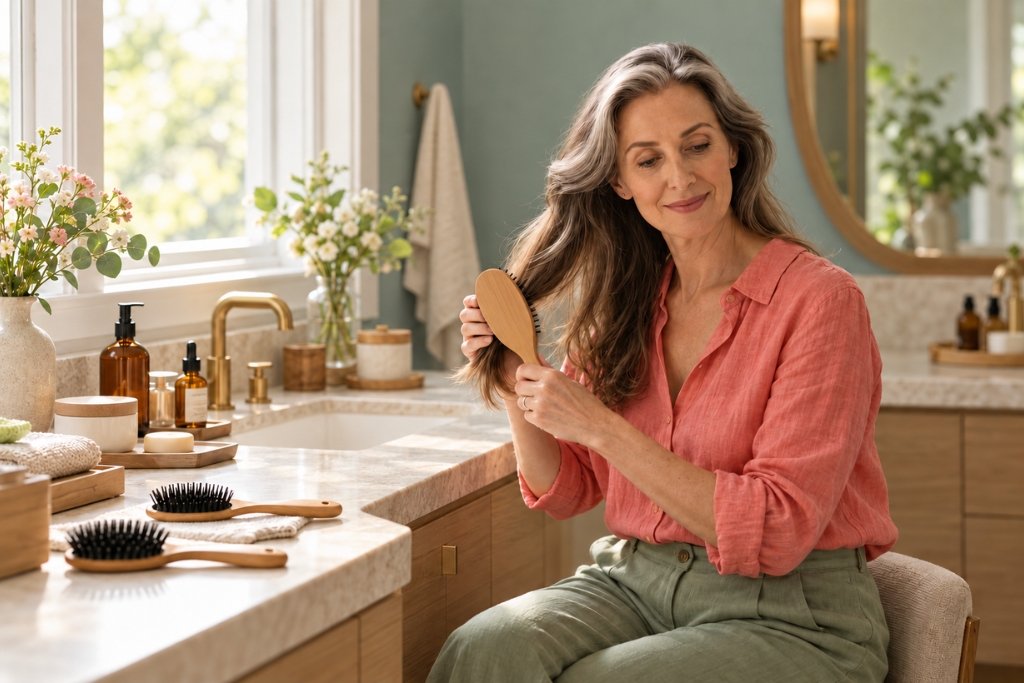 aging hair care
Turn Down Heat and Tension
Apply a heat protectant for fragile hair before blow-drying or using hot tools, following its directions. Then keep temperatures low and avoid repeatedly heating the same section.
Heat protection reduces risk; it doesn’t make frequent high-temperature styling harmless.
Treat damp hair gently; untangle without pulling. Avoid haircuts that pull tightly and constantly at the roots. Gentle cleansing, hydrating conditioner and the right leave-in products may help decrease breakage in brittle, thinning hair. Menopause hair care should allow for styling choices while not allowing for damage.
Create Fullness Without Heavy Layers
Volumizing hair products can make fine hair look fuller. Try a small amount of root-lifting mousse or spray rather than coating every strand.
Styling volume is a temporary appearance change, not evidence of new hair growth.
Gray hair care also needs flexibility. Use toning products when unwanted tones bother you, and follow the instructions. Clarifying washes serve a different purpose: removing buildup.
You don’t need both at every wash. A suitable cut and lighter styling routine may make mornings easier.
A Quick Routine That’s Easy to Maintain
The best hair routine for women over 50 fits your texture and schedule:
- Wash when your scalp needs it.
- Condition after shampooing, adjusting placement to your hair type.
- Detangle gently rather than forcing through knots.
- Use lower heat and protection before thermal styling.
- Introduce one new product at a time.
Keep the routine manageable. You’ll learn more from consistent basics than constant product changes.
Give Thinning the Right Attention
Hair loss after 50 deserves assessment when it is sudden, patchy, or progressively worsening. Preventing hair thinning after menopause starts with identifying the cause; a moisturizing mask cannot replace appropriate treatment. Medical conditions, medications, or nutritional deficiencies may need consideration.
Hair care over 50 can reduce avoidable damage and improve everyday handling. Pair that gentle routine with timely attention to persistent changes, and you’ll have a clearer, more practical approach to caring for your hair.