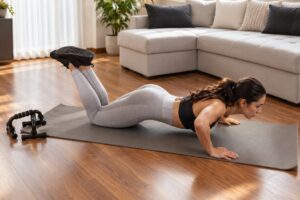
Desk Movement Breaks to Ease Daily Stiffness

Desk Movement Breaks
Desk movement breaks can make a real difference if your day mostly happens in a chair. Tight shoulders, stiff hips, a heavy lower back, and that 3 PM brain fog are common when work keeps you glued to a screen for hours.
And no, you don’t need a full gym session between meetings to feel better. The idea is simple. Short movement breaks, done often, can interrupt the physical stress of sitting and help your body stay more awake, mobile, and less cranky by the end of the day.
Why desk movement breaks work
Desk movement breaks are tiny bursts of movement that usually take one to three minutes. They’re not meant to replace proper workouts, but they do help break up a sedentary lifestyle before stiffness builds up.
Sitting for long hours keeps your hips folded, your glutes quiet, your shoulders rounded, and your neck pushed forward toward the screen. Over time, that pattern can feed joint stiffness, lower back discomfort, and poor posture.
Here’s the useful part. Your body responds quickly to small changes in position. A few standing calf raises, a seated spinal twist, or a short walk to refill your water can restart circulation and wake up muscles that have gone quiet. A helpful way to think about it: your body doesn’t only care about your one-hour workout; it also cares about what you do during the other 15 waking hours.
Start with the upper body reset
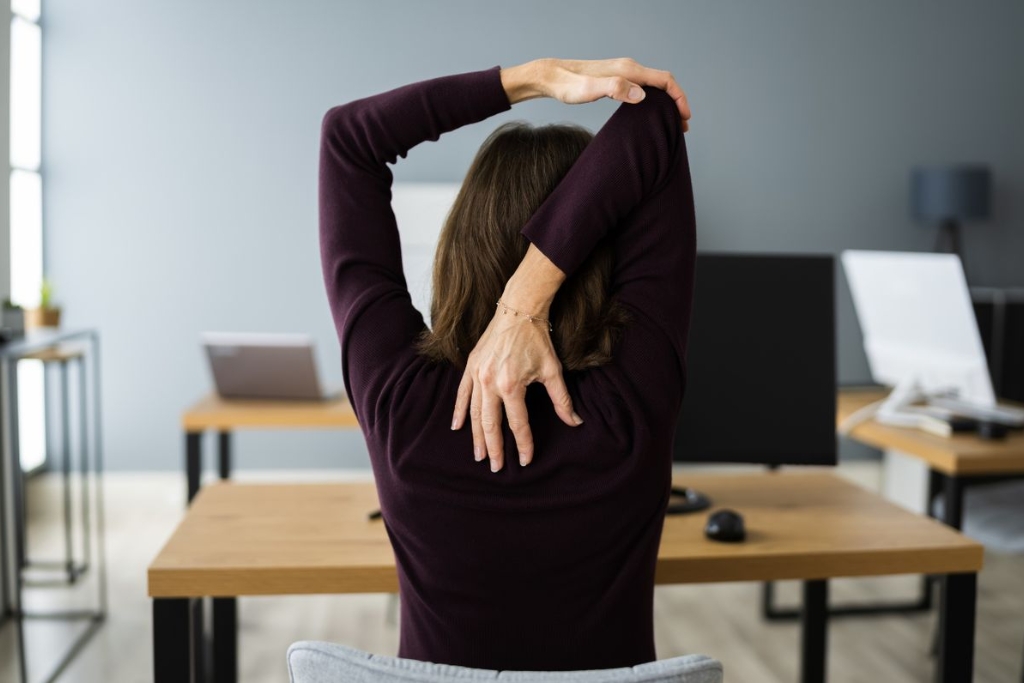
If your shoulders creep toward your ears while working, this one helps. Sit tall, roll your shoulders back, and squeeze your shoulder blades gently together for five seconds. Release. Repeat five to eight times.
This works well as a quick posture corrector without needing a brace or stiff support device. Pair it with tech neck stretches. Tuck your chin slightly, like you’re making a double chin, and hold for a few seconds. Then gently tilt one ear toward the shoulder and switch sides.
Keep it soft. No yanking. These office stretches help counter the forward-head position that builds from looking at laptops, phones, and monitors all day.
desk movement breaks for your back
A seated spinal twist is one of the easiest desk-bound mobility exercises to add between calls. Sit upright, move slightly away from the backrest, place your right hand on the outside of your left thigh, and rotate gently to the left.
Hold for three slow breaths. Then switch sides. This stretch feels small, but it helps the mid-back rotate and can reduce that locked-up feeling from sitting too long. It’s also one of the best desk stretches for lower back pain when done gently and without forcing range.
If your lower back feels compressed, stand up and reach both arms overhead. Take one deep breath. Then place your hands on your hips and gently squeeze your glutes for a few seconds. Small move. Big relief.
Wake up your legs without leaving the desk
Your legs do a lot less during desk work than they were built to do. That’s why standing calf raises are so useful. Stand behind your chair or near your desk. Lift your heels slowly, pause at the top, and lower with control. Do 15 to 20 reps.
This simple move pumps blood through the lower legs and gives your calves a quick activation hit. It also fits perfectly into desk job fitness because it doesn’t require space, equipment, or a clothing change. Add a few bodyweight squats if you have privacy. Even 10 controlled reps can shake off sluggishness faster than another coffee.
Quick movement menu for busy workdays
- 20 standing calf raises before checking emails
- 5 shoulder blade squeezes after each long call
- 3 slow seated spinal twists on both sides
- 30 seconds of walking during phone calls
- 10 chair sit-to-stands before lunch
- 5 chin tucks after scrolling on your phone
- 1 minute of standing after every hour of sitting
Make active sitting less complicated
Active sitting doesn’t mean constantly fidgeting or buying expensive equipment. It simply means changing position often enough that your body doesn’t stay frozen. Shift your feet. Sit tall for a few breaths. Stand during a call. Walk while reading a short message. Use hourly movement reminders if you lose track of time.
This is where most people struggle. Not because the exercises are hard, but because work absorbs attention. Three hours can disappear inside a spreadsheet before your body gets a say. Set a quiet reminder every 45 to 60 minutes. When it goes off, do one desk exercise snack. That’s it.
Posture corrector
Use a stand-up desk routine wisely
A stand-up desk routine can help, but standing all day is not the goal. Standing still for hours can create its own discomfort. Instead, alternate. Sit for focused tasks. Stand for shorter work blocks. Move during calls. Stretch between meetings.
The real win is position variety.
High-intensity microbreaks can also help when your energy drops. Try 20 seconds of fast marching in place, 10 squats, or a brisk walk down the hallway. It’s not a full workout, but it can clear mental fog quickly.
Practical note: if you have pain, dizziness, balance issues, recent injury, or a medical condition, keep movements gentle and check with a professional before adding intense microbreaks.
Build a habit your body can trust
desk movement breaks work best when they feel easy enough to repeat. Don’t build a complicated routine that dies after two days. Pick three moves: one for the neck, one for the back, and one for the legs.
That’s a strong start. Over time, these tiny movement breaks for desk jobs can reduce stiffness, improve posture awareness, and make the workday feel less physically draining. They also support workplace wellness in a way that feels realistic, not dramatic.
The point is not to turn your office into a gym. It’s to stop your body from staying stuck in one position for too long. A minute here and there adds up, and your joints, back, neck, and focus will usually notice the difference before the week is over.