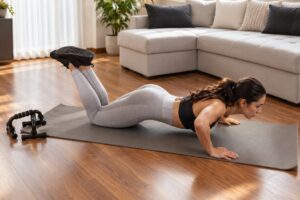
How Hollow Hold Exercise Improves Posture
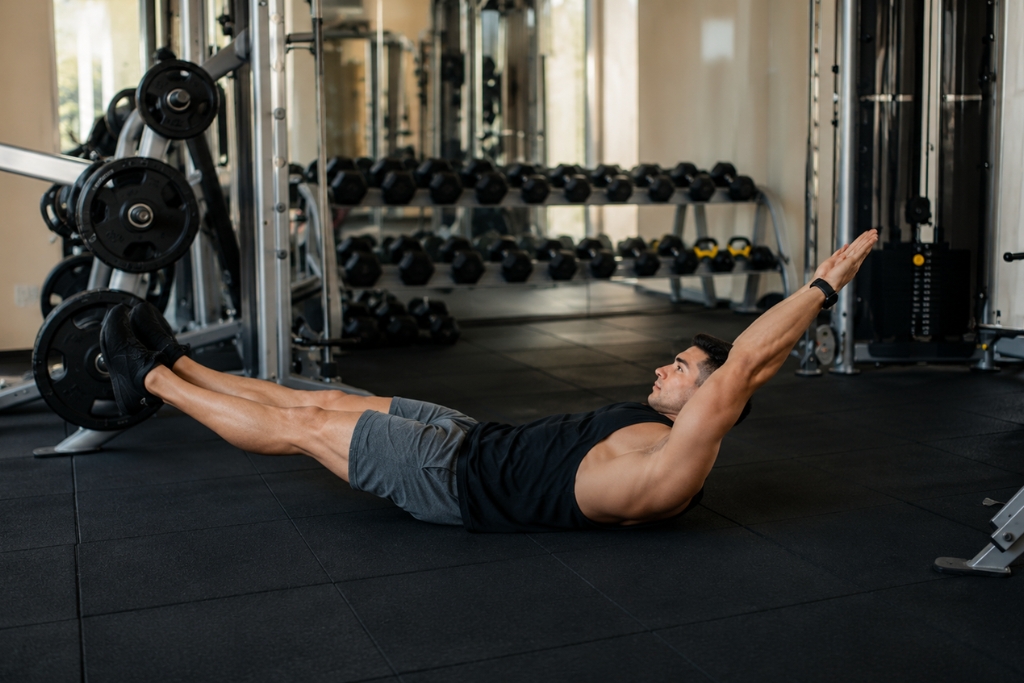
Hollow hold exercise
The hollow hold exercise looks simple until you try to hold it properly. Then your body tells the truth. Your abs shake, your lower back wants to lift, and suddenly a “basic” core move feels far more serious than crunches.
That is exactly why it works. If your goal is better balance, stronger posture, fewer lower back issues, or more control during workouts, this one move deserves a place in your routine. The hollow hold core exercise builds deep core strength, not just visible abs.
Why Your Core Needs More Than Crunches
Most people think core exercises mean crunches, sit-ups, or fast ab circuits. Those moves can have a place, but they often train only the front layer of the abs. Worse, poor form can pull on the neck and irritate the lower back.
The hollow hold exercise works differently. It is an isometric core hold, which means your muscles contract without moving. Instead of curling up and down, you hold a strong shape while your body fights to stay stable.
That trains your functional core. Your trunk stabilizers, deep abdominal muscles, obliques, and hip-control muscles all have to work together. This is important because real-life balance depends on resisting movement, not just creating movement.
What the Hollow Hold Actually Trains
The hollow hold targets the transverse abdominis, which is the deep core muscle that wraps around your midsection like an internal belt. It also works your pelvic floor, internal obliques, rectus abdominis, and the stabilizing muscles around your spine.
In plain language, it teaches your middle to stay strong while your arms and legs move away from your body. That matters when you walk, run, lift weights, carry groceries, climb stairs, play sport, or even sit at a desk without collapsing into bad posture. The hollow hold exercise is not just an ab move. It is stability training.
Hollow Hold Exercise for Balance
The hollow hold exercise improves balance because it gives your limbs a stronger base to move from. If your trunk is weak, your arms and legs have to compensate. That can show up as wobbling, poor posture, awkward movement, or lower back strain.
Balance exercises often focus on standing on one leg or using unstable surfaces. Those are useful. But abdominal stability is the foundation underneath them. When your core can hold position, your body moves with better control. That is why this bodyweight core workout is helpful for beginners, athletes, runners, yoga practitioners, and anyone who wants better daily movement.
Hollow Hold Form Guide
Good form matters more than long holds. A clean 10-second hold beats a shaky 40-second hold with your back arched.
Here is how to do it:
- Lie on your back with your legs extended and arms by your sides.
- Pull your belly button gently down toward your spine.
- Press your lower back firmly into the mat.
- Lift your head and shoulder blades slightly off the floor.
- Raise your legs a few inches while keeping them straight.
- Reach your arms overhead if you can hold form.
- Keep your chin tucked and breathe slowly.
The key is the lower back. If it lifts off the floor, the move is too advanced for your current strength. No ego here. Adjust the position and build up.
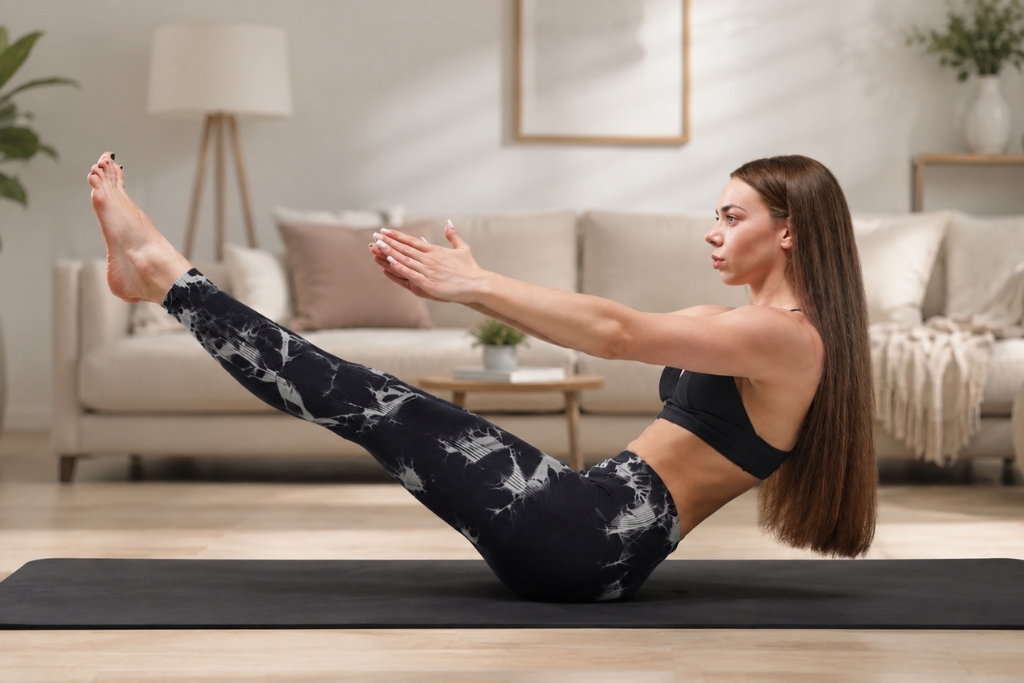 Core exercises
Easy Hollow Hold Modifications
Not everyone should start with the full version. Hollow hold modifications help you train safely while still building deep core muscle activation.
Try these progressions:
- Beginner: Keep knees bent in tabletop and head on the floor.
- Next step: Lift head and shoulders while keeping knees bent.
- Intermediate: Extend one leg while the other stays bent.
- Stronger hold: Extend both legs but keep arms by your sides.
- Advanced: Full hollow body hold with arms overhead.
- Loaded version: Hold a light weight overhead only after mastering form.
This hollow-body hold progression protects your back while letting your core adapt.
How Often Should You Do It?
The hollow hold exercise can be done daily because it does not load the body like heavy resistance training. Still, quality matters. Stop before your form breaks. Start with 3 rounds of 10 seconds. Rest between rounds. Once that feels solid, build toward 20 to 30 seconds.
You can use it before workouts as core activation, during yoga flows as a strength add-on, or as a quick daily core workout during a work break. For better balance and posture core moves, pair it with bird dogs, dead bugs, side planks, and glute bridges.
Common Mistakes to Avoid
The biggest mistake is letting the lower back arch. That shifts stress away from the abs and into the spine. Another mistake is holding your breath. Deep, controlled breathing helps your core stay engaged without creating unnecessary tension.
Do not crane your neck either. Keep your chin slightly tucked, like you are holding a small orange under it. If you feel sharp back pain, stop and modify. Shaking muscles are fine. Pain is not.
Conclusion
The hollow hold exercise proves that core training does not need to be complicated to be effective. It teaches deep core strength, abdominal stability, and better control through the trunk, which can improve balance, posture, and everyday movement. Start with the version your body can handle, keep your lower back pressed down, breathe through the hold and build slowly. Done daily for a few minutes, this simple move can become one of the most useful balance and posture core moves in your routine.