Can Hand Scan Health Test Help Detect Toxic Load
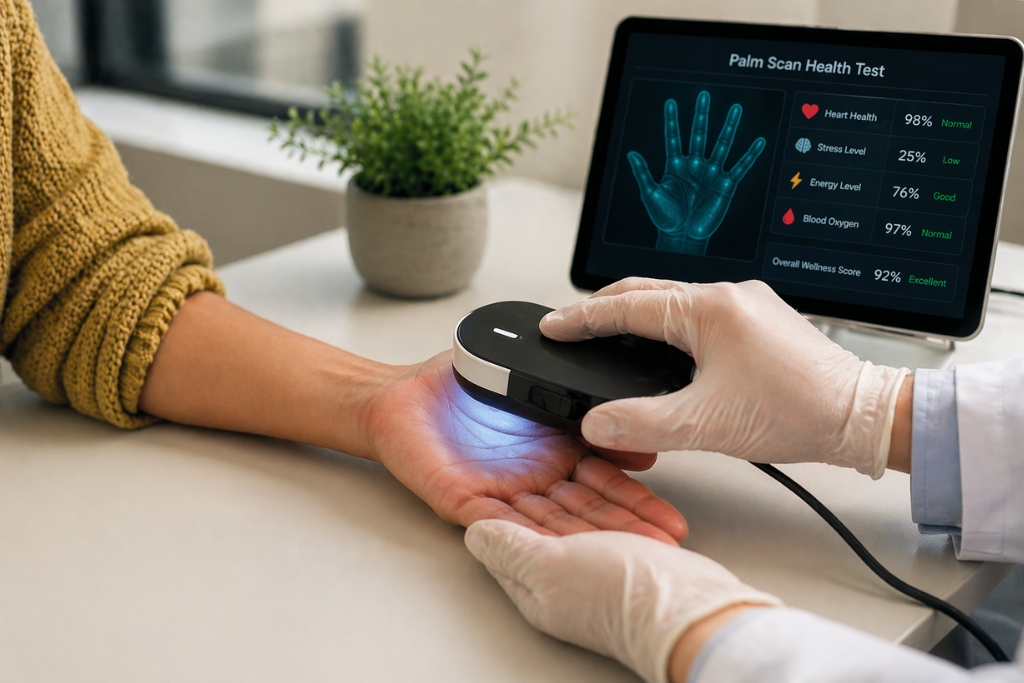
hand scan health test
It sounds almost too simple. A quick scan of your palm, no needles, no waiting, and you walk away with insights about your body. Naturally, you pause and wonder—can hand scan health test methods actually work, or is this just another passing trend in wellness?
If you’ve ever felt frustrated by “normal” blood reports that don’t explain how you feel, you’re not alone. That gap between results and reality is exactly where these new tools are stepping in.
How Hand Scan Health Test Technology Works
At the core of this innovation is spectrophotometry. Devices like the SoCheck palm scanner and OligoScan use light, not needles, to read what’s happening beneath your skin.
They emit different wavelengths that interact with your tissues. The idea is simple: your body absorbs and reflects light differently depending on mineral levels and toxin presence. That’s how intracellular mineral levels and heavy metal analysis are estimated in seconds.
Unlike traditional diagnostics, this method focuses on tissue-level data rather than just what’s circulating in your bloodstream at that moment. That distinction matters more than most people realize.
Can a Hand Scan Health Test Replace Blood Work?
Can hand scan health tests replace traditional diagnostics? Short answer? Not entirely.
Blood tests still dominate acute diagnosis. They tell you what’s actively happening in your body right now. Palm scans, on the other hand, look at longer-term patterns. They reveal what your tissues have stored over time. That’s why comparing spectrophotometry vs. blood test approaches isn’t about choosing one over the other. It’s about understanding their roles.
When used together, they create a more complete picture.
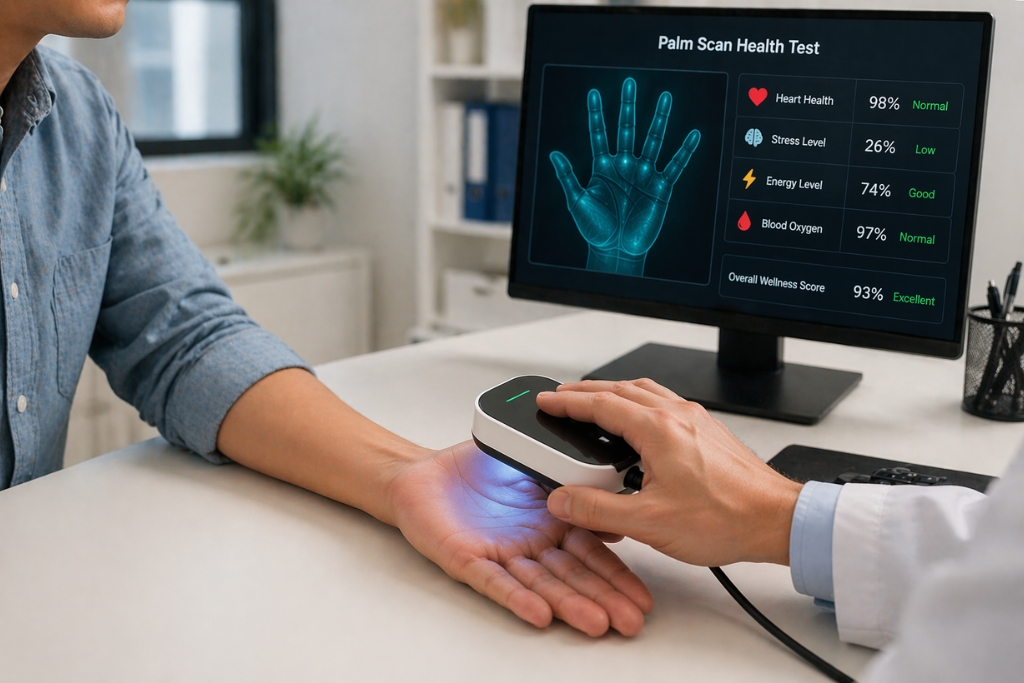
oligoscan spectrophotometry
Why Non-Invasive Diagnostics Are Growing Fast
Health screening 2026 is growing very swiftly for a reason. People want solutions quickly and without pain. That’s exactly what non-invasive diagnostics do.
You don’t have to wait days for lab findings; you get them right now. This aligns perfectly with the trend toward preventative healthcare, where knowing about a problem early is more important than fixing it later. And to be honest, convenience is a significant factor. People are much more inclined to keep an eye on their health if it doesn’t hurt and is quick.
The Role of Mineral Deficiency and Toxic Load
One of the biggest appeals of a can hand scan health test approach is its ability to highlight subtle imbalances.
Mineral deficiency testing often gets overlooked until symptoms become obvious. By then, recovery takes longer. These scans aim to catch issues earlier, especially in cellular health, where changes happen quietly.
Heavy metal analysis is another area gaining attention. Environmental exposure isn’t rare anymore. Air, water, food—it all adds up. This is where biophotonic scanning offers an advantage by identifying tissue metal toxicity trends without requiring invasive procedures.
Where It Fits in Everyday Wellness
Not everyone needs constant testing. But certain groups benefit more from this kind of insight:
- People dealing with chronic fatigue or unexplained symptoms
- Individuals focused on preventative healthcare strategies
- Those exploring biohacking trends and optimization routines
- Urban populations exposed to environmental pollutants
- Fitness enthusiasts tracking recovery and mineral balance
These aren’t extreme cases. They’re everyday scenarios.
Limitations You Shouldn’t Ignore
Let’s keep this realistic. A can hand scan health test is not a diagnostic replacement. It doesn’t confirm disease. It doesn’t replace medical advice.
What it does is highlight patterns. Think of it as a screening layer, not a final answer. If something looks off, the next step still involves traditional testing. That’s how responsible use of diagnostic innovation works.
The Bigger Shift in Health Screening 2026
The real story isn’t just about palm scanners. It’s about how people are approaching health. There’s a shift from reactive care to proactive monitoring. From waiting for symptoms to understanding signals early.
Longevity tech is pushing that shift forward. Faster tools. Better awareness. More control. And in that context, tools like OligoScan spectrophotometry aren’t replacing medicine—they’re expanding it.
Conclusion
So, can the technology behind hand scan health tests actually predict what will happen to your health? Not in a crystal-ball way, but it can show you patterns your body has been holding onto without you knowing. When you employ that understanding the right way, it becomes really strong. It helps you take action sooner, make better decisions, and learn more about your health than just what the reports say. In today’s world of care, where speed and personalization are key, these tools don’t replace traditional diagnostics but rather add to them, providing you a better, more complete picture of your health.